Whether you just moved to the area, serve at a nearby military installation, or have called this coastal city home for years, understanding how auto insurance works in New London, CT is essential. This guide covers Connecticut’s legal coverage requirements, truthful garaging rules, relocation steps, and practical tips for getting a quote – all tailored to people who drive, park, and live in New London.
Key Takeaways for Auto Insurance
-
ConnecticutAutoInsurance.com, operated by Drivers Insurance Agency, Inc. at (844) 399-1313, helps New London, Connecticut drivers compare personal auto insurance from participating insurers.
-
Connecticut law requires minimum liability of 25/50/25 or a $50,000 combined single limit, plus uninsured/underinsured motorist (UM/UIM) coverage of at least 25/50 for bodily injury. Collision and comprehensive coverage are optional by law but often required by lenders.
-
Truthful garaging and registration in New London are critical. Mismatches between your policy address and DMV records can trigger compliance fines or claim problems.
-
All quotes shown online or by phone are nonbinding until the chosen insurer formally approves the application and sets an effective date.
-
This article includes a same-limit checklist (labeled hypothetical), a FAQ section, and links to related pages including /quote/, /minimum-car-insurance/, /cheap-car-insurance/, /non-owner-insurance/, /sr22-insurance/, and nearby city guides for Groton, Norwich, and Middletown.
How Auto Insurance Works in New London, CT
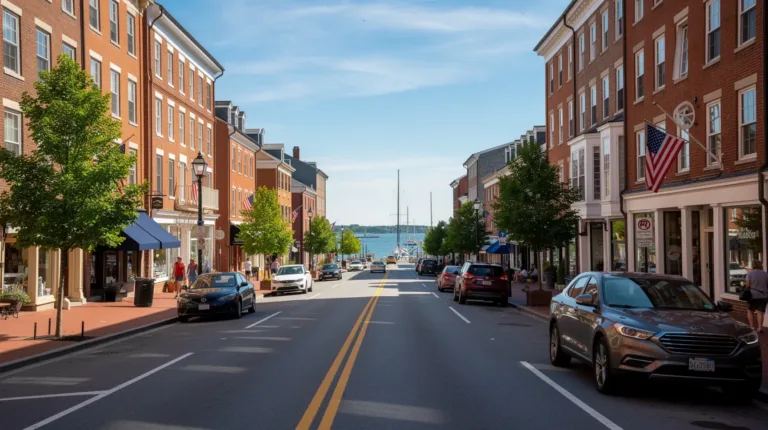
New London sits along the Thames River and Long Island Sound, with busy corridors like I-95, Route 32, and Bank Street carrying daily commuters, students, and Navy households through the area. That mix of highway speed, city traffic, and coastal weather makes solid auto insurance a matter of real, everyday protection.
A personal auto policy generally bundles several types of coverage – liability, UM/UIM, and optional physical damage – into a single contract. Auto insurance includes liability, collision, and comprehensive coverage, each serving a different purpose. This guide focuses specifically on residents and vehicles garaged in New London ZIP codes such as 06320.
ConnecticutAutoInsurance.com is operated by Drivers Insurance Agency, Inc., an independent agency that compares participating insurers. Available coverage, payment options and pricing depend on each insurer’s underwriting rules and your application.
-
Official consumer rules and coverage minimums come from the Connecticut Insurance Department.
-
DMV compliance information is available at the CT DMV compliance page.
Connecticut Minimum Auto Insurance Requirements
Connecticut drivers must legally carry minimum liability limits for auto insurance. Connecticut law requires auto insurance policies to meet minimum liability requirements, and minimum liability coverage in Connecticut includes bodily injury and property damage.
Here is what the law demands:
-
Bodily Injury Liability: Connecticut requires limits of at least $25,000 per person and $50,000 per accident. These are coverage limits, not guaranteed payments; covered damages and policy terms determine the amount payable.
-
Property Damage Liability: $25,000 per accident. This pays for damage your vehicle causes to another person’s car, fence, structure, or other property.
-
Alternative: Instead of the 25/50/25 split, you may carry a $50,000 combined single limit (CSL) that covers both bodily injury and property damage together.
-
Uninsured/Underinsured Motorist (UM/UIM): Mandatory at a minimum of $25,000 per person and $50,000 per accident. This is bodily injury coverage only – not a three-number property coverage format.
-
Collision and Comprehensive: Not required by Connecticut statute, but frequently required by banks and credit unions if the vehicle is financed or leased.
These are state minimums, not recommendations. Many New London residents with higher income, assets, or family obligations should consider higher limits for better protection. You can compare these minimums with more robust options on the /minimum-car-insurance/ and /cheap-car-insurance/ pages.
Liability, UM/UIM, and Optional Coverages Explained
Understanding what each coverage actually does can make the difference between a well-protected family and a financial headache after a crash.
-
Bodily Injury Liability pays for injuries to other people when you are at fault. If you cause an accident on Jefferson Avenue or Colman Street, this coverage responds to the other driver’s medical bills and related costs. Liability coverage pays for damages to others in accidents.
-
Property Damage Liability covers damage your car causes to someone else’s property – their vehicle, a storefront, a guardrail, or anything else you hit.
-
UM/UIM Bodily Injury steps in when the at-fault driver has no insurance or not enough insurance to cover your injuries. Uninsured motorist coverage protects against uninsured drivers. For example, if you are hit by an uninsured driver near Ocean Beach Park, your UM/UIM coverage pays for your medical expenses up to policy limits.
-
Collision Coverage pays for damage to your own vehicle from a crash, regardless of who is at fault. Collision coverage pays for damage to your own vehicle.
-
Comprehensive Coverage handles non-collision losses such as theft, fire, vandalism, flooding, or falling objects. Comprehensive coverage protects against non-collision incidents. Both collision and comprehensive are optional by law but commonly required by lenders.
Do not confuse UM/UIM bodily injury limits with the 25/50/25 liability numbers. UM/UIM in CT uses a two-number format (per person/per accident) because it covers bodily injury only. Review your current declarations page and consider matching UM/UIM limits to your liability limits where budget allows.
Truthful Garaging, Registration, and DMV Compliance in New London
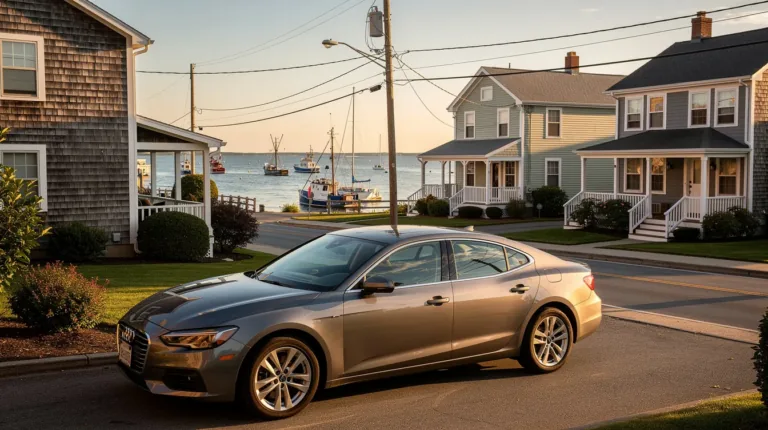
“Garaging” means where the car is normally parked or stored, usually overnight. For New London drivers, this typically means a home address within the city or nearby communities – wherever the vehicle truly stays.
-
Accurately listing your New London garaging address and matching it with your Connecticut DMV registration records reduces the risk of policy issues, premium adjustments, or DMV insurance compliance notices. A family whose primary residence is near Ocean Beach Park, for instance, should list that address – not an out-of-state relative’s home.
-
Connecticut requires continuous liability insurance for any registered vehicle. If your coverage lapses while the vehicle remains registered, the DMV may send a compliance warning and assess a potential $200 fine.
-
There is no automatic 14-day “grace period” to drive without insurance on a newly purchased vehicle. Talk with an agent before driving a new car so coverage is properly arranged.
-
Connecticut does not require automatic physical plate return in every situation, but canceling registration correctly is essential to stop insurance obligations. Follow current DMV instructions rather than assumptions.
-
If you moved to New London from another state, update both registration and insurance promptly so your policy reflects Connecticut law and your true garaging location. Visit the DMV locations page for office information.
Relocating to New London, CT (Including Military Households)
People arrive in New London for work at area employers, enrollment at local colleges like Mitchell College, or service connected to Naval Submarine Base New London in the region. Each relocation creates specific auto insurance questions.
-
Step 1: Check Connecticut DMV licensing and registration requirements for your situation, including any applicable military or student exceptions.
-
Step 2: Secure a CT-compliant auto insurance policy that meets or exceeds the 25/50/25 liability and 25/50 UM/UIM minimums.
-
Step 3: Confirm that your new garaging address in or near New London is accurately reflected on the policy and matches DMV records.
Military households should confirm licensing and registration rules with the DMV and report actual vehicle location and use to the insurer. Home of record, legal residence and garaging can differ; do not assume either an exemption or a requirement without checking the applicable rules.
Students bringing a car to Mitchell College or USCGA cadets with vehicles should work with parents to list and rate these drivers correctly, with honest usage and garaging details. Misrepresenting where a vehicle stays can lead to claim complications or a change in coverage terms.
Drivers Insurance Agency, Inc. can help compare options from participating insurers for households splitting time between states, but cannot override state law or insurer underwriting rules.
Listing Drivers, Household Vehicles, and Non-Owner Policies
Insurers focus on all household drivers because anyone with regular access to a vehicle represents a risk the policy needs to account for.
-
Disclose licensed household members and regular vehicle access. Ask the insurer how each driver must be listed and rated instead of assuming coverage or an exclusion.
-
Leaving a household driver off the policy in New London creates risk: possible claim complications, retroactive premium adjustments, or policy changes. Honesty about who drives each car matters as much as truthful garaging.
-
Non-owner auto insurance is a liability-only policy designed for people who regularly drive but do not own a vehicle and do not have regular access to a household car.
-
Non-owner eligibility typically excludes situations where the person has regular access to a household vehicle. A New London resident who borrows a roommate’s car every day likely does not qualify. If you think non-owner coverage may fit your situation, visit the /non-owner-insurance/ page before calling for a quote.
Getting a New London Auto Insurance Quote with ConnecticutAutoInsurance.com
Drivers Insurance Agency, Inc. uses ConnecticutAutoInsurance.com to gather driver, vehicle, and coverage information from New London residents and then request quotes from participating insurers. Comparing auto insurance quotes helps drivers find affordable options, and they help clients save money on insurance coverage by shopping across companies.
-
Online or phone quotes are estimates only and are based on the driver, vehicle, garaging, and coverage information submitted. Coverage is not in force and quotes are nonbinding until an insurer approves the application, issues a policy, and specifies an effective date.
-
Have ready when requesting a quote: VIN, current odometer reading, garaging address in New London, lienholder details, driver license numbers for all household drivers, and any recent accidents or violations.
-
Discuss collision and comprehensive coverage explicitly, especially for financed vehicles, because lenders may require them even though Connecticut law does not.
-
You can start the process via the /quote/ page or by calling (844) 399-1313. No specific savings or approval outcome is promised.
Sample Same-Limit Coverage Checklist (Hypothetical)
This section is a hypothetical example checklist. It does not show premiums, is not a recommendation for every driver, and does not guarantee eligibility or approval.
“Same-limit” structures match your liability and UM/UIM bodily injury limits so you carry equal protection in both directions. Here are examples:
|
Liability Limits |
UM/UIM Bodily Injury |
|---|---|
|
50/100/50 |
50/100 |
|
100/300/100 |
100/300 |
|
$300,000 CSL |
$300,000 UM/UIM BI |
-
Use this checklist as a starting point to talk with an agent, not as a one-size-fits-all plan.
-
Higher limits can better protect income, savings, and property if a serious accident occurs on I-95 or other high-speed routes in and around New London.
-
Compare these hypothetical same-limit structures against the Connecticut minimums described earlier and consider how much personal risk you are comfortable retaining.
Handling Accidents, Claims, and Local New London Resources
If you are involved in a collision in New London, the first minutes matter. Here is what to do:
-
Check for injuries and call 911 if anyone is hurt. The New London Fire Department’s Firefighting Division responds to vehicle fires, hazardous materials incidents, and technical rescues as part of the city’s emergency response network.
-
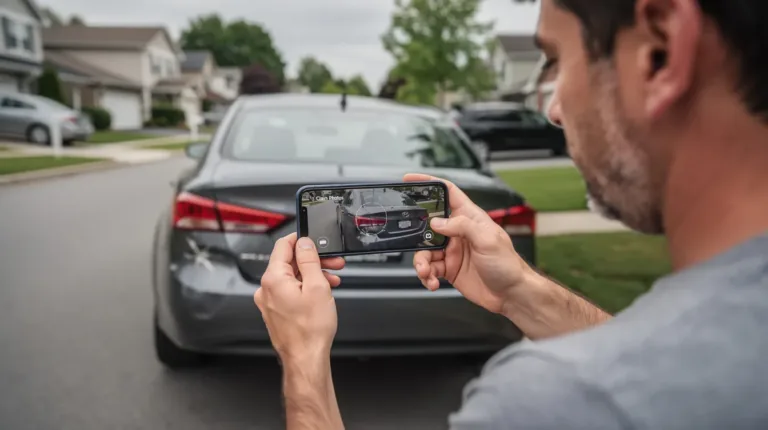
Move to safety if possible. Exchange information with other drivers and document the scene with photos. Quick documentation and prompt reporting can help prevent disputes or claim delays.
-
Report the claim promptly to the insurer shown on your insurance ID card.
-
Drivers involved in crashes within the city may need a New London Police accident report. You can look up reports by entering the 2-digit year immediately followed by the 4-digit report number (e.g., 211234 for report #1234 from 2021), plus the last name of at least one involved party and the date. Find instructions at the NLPD accident reports page.
-
Claims are handled through the participating insurer that issued the policy, not through local government offices. Drivers Insurance Agency, Inc. can help explain coverage but does not replace insurer claim departments.
-
Keep your insurance ID card in the vehicle. Connecticut accepts electronic insurance ID cards. Verify which repair options and rental car provisions are available under your specific policy.
Saving on Auto Insurance in New London Without Cutting Corners
Balance cost with protection by comparing the same limits and deductibles. Report garaging, mileage and driving history accurately; no particular savings amount is guaranteed.
-
Adjust deductibles: Higher deductibles may lower auto insurance monthly premiums in Connecticut, but only raise them to a level you can comfortably pay out of pocket.
-
Review vehicles and usage: A car driven fewer miles or used only for personal errands may cost less to insure than one used for a long daily commute.
-
Multi-car or multi-policy setups: Ask your agent whether bundling home and auto or insuring multiple vehicles on one policy creates an opportunity to save.
-
Safety and anti-theft features: Participating insurers may recognize certain devices when rating your vehicle.
-
Telematics: Telematics programs may reduce insurance rates for safe drivers in Connecticut by tracking driving habits.
-
Driver information: List the people who actually drive or have household access to the vehicle. Do not add a person solely to seek a lower price or misstate who primarily uses the car.
-
Routine reviews: Connecticut consumer guidance recommends reviewing coverage at each renewal. Revisit your policy before major life events – relocation to New London, marriage, a teen getting licensed, or paying off an auto loan.
Explore more ideas on /cheap-car-insurance/ and /minimum-car-insurance/.
Nearby Cities and Special Situations (SR-22, High-Risk Drivers)
Many New London drivers regularly travel to or work in nearby areas like Groton, Norwich, and Middletown. Each community has its own driving patterns and considerations:
An SR-22 is proof of financial responsibility filed with a requesting authority, not a separate insurance policy. Requirements depend on the specific state or authority and notice. Confirm the required form, limits and duration before requesting a filing.
If you have been told you need an SR-22, review the /sr22-insurance/ page and contact Drivers Insurance Agency, Inc. to see if participating insurers can help. Placement is not guaranteed.
Frequently Asked Questions About New London Auto Insurance
Below are answers to common questions that New London drivers ask when shopping for or managing their auto insurance.
When should I switch my auto insurance after moving to New London, CT?
Arrange a Connecticut-compliant policy as soon as you establish New London as your primary residence and before registering your vehicle in CT. Coordinate your policy start date with your DMV registration steps so there is no gap in coverage. Driving without insurance while registered is not permitted and can lead to fines.
Does my personal auto policy cover business use in New London?
Many personal auto policies limit or exclude certain types of business use, such as delivery, rideshare, or transporting goods for pay. If you use your car for work in New London, review your policy exclusions carefully and speak with an agent to find out whether your usage is acceptable or whether a different policy form is needed.
How does non-owner insurance work if I rent cars in New London?
A non-owner policy typically provides liability coverage when you rent or occasionally borrow vehicles, but it usually does not include collision or comprehensive coverage for damage to the rented car itself. If you rent frequently, review the rental company’s offerings alongside your non-owner policy and speak with an agent about any gaps.
What if my teen starts driving in New London while away at school?
Notify your insurer as soon as a teen is licensed, even if they are attending school in or near New London. Accurately describe where the vehicle stays and how often the teen drives so the insurer can rate the policy correctly. Failing to disclose a new driver can create coverage problems at claim time.
Can I choose my own repair shop after a crash in New London?
Connecticut consumers generally have the right to choose their own repair shop. However, your insurer may have a preferred network that offers certain conveniences. Confirm any program details with your specific insurer when you open a claim, and remember that satisfied customers often find peace of mind in knowing they can trust the shop doing the work.
Ready to start comparing your options today? Visit /quote/ for a free quote or call Drivers Insurance Agency, Inc. at (844) 399-1313. Every person’s situation in New London is different – let an experienced independent agent help you find coverage that fits your life, your budget, and Connecticut law.