Connecticut requires every registered vehicle to carry auto insurance, and understanding exactly what the law demands can save you from fines, registration suspensions, and devastating out-of-pocket costs after an accident. This guide breaks down every mandatory and optional coverage type, walks through real-world claim scenarios, and gives you a practical framework for choosing limits that actually protect you.
Key Takeaways
-
Connecticut law mandates minimum liability coverage of $25,000 per person and $50,000 per accident for bodily injury, plus $25,000 per accident for property damage (25/50/25), or a $50,000 combined single limit (CSL). Separate uninsured/underinsured motorist bodily injury coverage of at least 25/50 is also required.
-
These minimum Connecticut car insurance requirements pay for other people’s injuries and property damage when you are at fault. Liability insurance does not repair or replace your own car.
-
Collision coverage and comprehensive coverage are optional under Connecticut law but are almost always required by lenders and leasing companies as a condition of financing.
-
UM/UIM coverage generally matches your bodily injury liability limits unless you sign an informed-consent form to select lower limits (never below 25/50). Optional underinsured motorist conversion coverage can increase available injury compensation because its limit is not reduced by the at-fault driver’s liability payment, subject to covered damages and policy terms.
-
ConnecticutAutoInsurance.com, operated by Drivers Insurance Agency, Inc., can compare multiple available insurers statewide. Call (844) 399-1313 or request a quote online.

How Connecticut’s Minimum Car Insurance Requirements Work
To register and legally drive a motor vehicle in Connecticut, you must carry at least the state-mandated liability and UM/UIM coverages. Parking a car does not automatically remove its insurance obligations. For stored or seasonal vehicles, follow the DMV’s registration, plate-hold or approved suspension-of-liability procedures before changing coverage, and do not drive while liability coverage is suspended.
Connecticut is a fault-based state for auto insurance liability, meaning the person found legally responsible for a car accident is financially responsible for the resulting damages. The state’s mandatory insurance framework is established under Chapter 700 of the Connecticut General Statutes and enforced through DMV registration rules.
These are minimum requirements. Drivers can and often should choose higher limits for better financial protection, especially given today’s medical costs and vehicle values. Insurers generally require all licensed household members with regular access to your vehicles to be listed on the policy or to provide proof of their own insurance coverage, in line with Connecticut Insurance Department guidance. The sections below spell out each coverage type, starting with the liability limits that form the core of every Connecticut auto insurance policy.
Connecticut Minimum Liability Coverage: 25/50/25 or $50,000 CSL
Liability coverage is the foundation of Connecticut car insurance requirements, and this coverage helps pay for injuries and property damage when you are the at fault driver in a car accident. It provides liability protection for injuries and property damage you cause – it never pays for your own losses.
Under C.G.S. §§ 14-112 and 38a-335, the minimum liability limits are:
-
Bodily injury liability: $25,000 per person / $50,000 per accident
-
Property damage liability: $25,000 per accident
This is commonly written as 25/50/25. Connecticut’s minimum insurance limits are $25,000 per person for bodily injury, $50,000 per accident total for bodily injury, and the minimum limit for property damage liability is $25,000 per accident.
As an alternative, Connecticut law allows a $50,000 combined single limit (CSL) that can be applied across bodily injury and property damage in any combination within a single accident.
What does this actually pay for?
-
Bodily injury liability covers medical expenses, lost wages, and pain and suffering for people you injure.
-
Property damage liability covers damage to another person’s property – their vehicle, a fence, a building, or other structures.
-
Liability coverage never pays to repair or replace your own vehicle or cover your own injuries. If you cause a collision and your car is damaged, you need separate collision coverage to handle that.
The Connecticut Insurance Department’s common-terms page provides official definitions for each of these coverage types.
Uninsured and Underinsured Motorist (UM/UIM) Requirements in Connecticut
In addition to liability, Connecticut insurance law (C.G.S. § 38a-336) requires uninsured/underinsured motorist bodily injury coverage on most automobile insurance coverage policies. This is separate from your liability to others – UM/UIM coverage protects you.
The minimum UM/UIM requirement is $25,000 per person and $50,000 per accident for bodily injury. Connecticut requires UM/UIM coverage of $25,000 per person, and this coverage applies to hit-and-run accidents as well as collisions with an uninsured or underinsured driver.
UM/UIM generally must match your bodily injury liability limits unless you knowingly elect lower limits in writing using a state-required informed-consent form. You can never go below the 25/50 minimum. Insurers must offer UM/UIM limits up to twice your bodily injury liability limits.
What UM/UIM covers:
-
Injuries to you, household family members, and passengers when struck by an uninsured driver, a hit-and-run driver, or an underinsured driver whose liability limits are insufficient
-
Your own insurer pays underinsured motorist coverage benefits after the at fault party’s liability limits are exhausted, up to your UM/UIM limit
Connecticut policies do not require UM/UIM property damage coverage – the mandate applies only to bodily injury.
Required vs. Optional Coverage: What Connecticut Law Does and Does Not Make You Buy
Connecticut’s mandatory insurance coverage is liability plus UM/UIM bodily injury. Everything else is optional coverage under state law, though your lender or lease company may contractually require more.
Required by Connecticut law:
-
Bodily injury liability (25/50 minimum)
-
Property damage liability ($25,000 per accident, or part of a $50,000 CSL)
-
UM/UIM bodily injury (25/50 minimum)
Optional by law but commonly purchased:
-
Collision coverage
-
Comprehensive insurance
-
Medical payments coverage (MedPay), which helps pay for medical expenses after an accident regardless of fault
-
Towing and roadside assistance
-
Rental reimbursement for transportation expenses while your car is being repaired
-
Full glass coverage
-
Gap insurance, which covers the difference between a car’s value and your outstanding loan balance
Collision coverage is not required by Connecticut law but may be required by lenders. Comprehensive coverage is not required by Connecticut law but may be required by lenders. If you finance or lease a vehicle, expect your lender to mandate both as a condition of the loan.
“Full coverage” does not identify a standardized package of insurance coverage. Meeting only the legal minimum limits is very different from having robust insurance coverage. Review your loan or lease contract and speak with an independent agent to ensure you meet both state law and lender requirements.

Connecticut Auto Coverage Summary Table
The following coverages represent what Connecticut law requires and the most common additional coverage options available:
|
Coverage Type |
Required in Connecticut? |
Minimum / Typical Limits |
What It Pays For |
|---|---|---|---|
|
Bodily Injury Liability |
Yes |
$25,000 per person / $50,000 per accident |
Medical bills, lost wages, pain and suffering for injured victims you harm |
|
Property Damage Liability |
Yes |
$25,000 per accident |
Damage to another person’s property (vehicle, structure, etc.) |
|
Combined Single Limit (CSL) |
Alternative to split limits |
$50,000 per accident |
BI and PD combined in any proportion |
|
UM/UIM Bodily Injury |
Yes |
$25,000 per person / $50,000 per accident |
Your injuries from an uninsured or underinsured driver or hit-and-run |
|
Underinsured Motorist Conversion Coverage |
No (must be offered) |
Varies; matches or exceeds UIM limits |
Increases UIM recovery; not reduced by at fault driver payments |
|
Collision |
No |
Actual cash value minus deductible |
Repairs after your vehicle hits another car, object, or overturns |
|
Comprehensive |
No |
Actual cash value minus deductible |
Theft, vandalism, fire, flood, animal strikes, falling objects |
|
Medical Payments (MedPay) |
No |
Typically $1,000–$25,000 |
Medical expenses for you/passengers regardless of fault |
|
Rental Reimbursement |
No |
Typically $30–$50/day |
Rental car while yours is being repaired after a covered loss |
|
Towing/Roadside Assistance |
No |
Varies by insurer |
Towing and emergency road service |
|
Gap Insurance |
No |
Loan/lease balance minus ACV |
Difference between vehicle value and remaining loan after a total loss |
These are minimums and common options. Actual offerings and limits depend on the insurance company and underwriting rules. Always confirm available coverages when requesting a quote.
Optional Collision and Comprehensive: Protecting Your Own Car
Liability coverage and UM/UIM focus on injuries and damage involving others. Collision and comprehensive protect your own vehicle after a covered loss.
Collision coverage pays for repairs after a vehicle collision – whether you hit another car, a pole, a guardrail, or your car overturns. It is usually subject to a deductible. Comprehensive coverage pays for non-collision vehicle damage such as theft, vandalism, fire, flood, hitting a deer, falling objects, and many types of glass breakage, also subject to a deductible unless you add full glass coverage.
Without collision or comprehensive coverage, you may have to pay to repair or replace your own car after a loss. If you own a newer vehicle, going without collision and comprehensive means absorbing a potentially massive vehicle replacement cost on your own.
Choosing a higher deductible can lower your premium but increases what you pay out of pocket after an insurance claim. Pick a deductible you could realistically afford on short notice.
Quick examples:
-
You back into a pole in a parking lot → collision coverage applies
-
A tree branch falls on your car during a storm → comprehensive coverage applies
Underinsured Motorist Conversion Coverage: How It Works in Connecticut
Connecticut law (C.G.S. § 38a-336a) requires every insurance company to offer underinsured motorist conversion coverage as an optional enhancement. Understanding the difference between standard and conversion coverage matters if you are ever in a serious car crash with a minimally insured driver.
Standard UIM: Your UIM benefit is typically reduced by whatever the at fault driver’s liability insurer pays. If the at fault driver has $25,000 in liability and you have $100,000 in standard UIM, your insurer may pay up to the $75,000 difference, for a total of $100,000, if covered unpaid damages support that amount and policy requirements are met.
Conversion coverage: With UIM conversion, your limit is not reduced by the at fault driver’s payment. Using the same example, after the at fault driver’s $25,000 payment, up to $100,000 of conversion coverage could be available for covered unpaid damages, for up to $125,000 total. Actual payment depends on your damages and policy terms; this does not permit general stacking of UM/UIM policies.
Underinsured motorist conversion coverage increases available injury compensation and can substantially reduce the risk of being undercompensated after a serious accident involving a driver carrying only minimum limits. It usually costs more than standard UIM, but the additional protection can be significant.
Ask your independent agent to quote both standard and conversion coverage options and review the insurer’s selection forms and policy terms.
Continuous Insurance, Registration Rules, and DMV Penalties
Connecticut law requires continuous auto insurance coverage to maintain registration. If your policy lapses, the DMV Insurance Compliance Unit will be notified by your insurer.
Here is the typical enforcement process:
-
The DMV issues a warning notice after being notified of a lapse
-
You must respond with proof of insurance (current card or declarations page) or documentation that the vehicle was sold, registered out of state, or that plates were returned
-
If the lapse is not resolved, the DMV may impose a $200 civil penalty and suspend your registration
-
A lapse of more than 14 days in coverage can result in fines and suspension
To avoid penalties when you no longer want to insure a vehicle, follow the DMV’s registration and plate cancellation procedures before canceling insurance. For a stored or seasonal vehicle, ask the DMV and insurer whether an approved plate-hold or suspension-of-liability arrangement applies. Do not drive without required liability coverage.
Not every lapse automatically requires an SR-22 filing. Connecticut may require financial responsibility filings in specific high-risk situations, but the DMV compliance process does not treat SR-22 as a universal requirement for all lapses or DUI offenses.
When switching insurers, coordinate carefully: make sure the new policy’s effective date begins before the old one ends. Even a one-day gap can trigger a DMV notice.
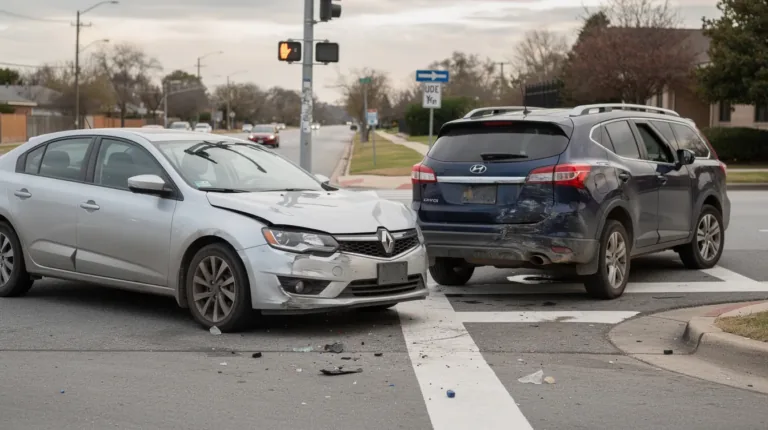
Real-World Claim Scenarios: How Minimum Coverage Plays Out
These simplified examples illustrate how the minimum amount of coverage responds in practice. Actual claim outcomes depend on policy language, facts, and applicable law.
Scenario 1: At fault, two injured victims
You cause an accident involving two pedestrians. Person A has $40,000 in medical bills; Person B has $35,000. Your 25/50/25 policy pays a maximum of $25,000 per person, so Person A receives $25,000 and Person B receives $25,000 – the $50,000 per accident cap is reached. You are personally responsible for the remaining $25,000 in unpaid medical expenses. A personal injury lawsuit from the injured victims could target your personal assets for the shortfall.
Scenario 2: Hit by an uninsured driver
An uninsured driver runs a red light and hits you. Your injuries produce $30,000 in medical bills. Your 25/50 UM coverage pays up to $25,000 per person, leaving $5,000 uncovered. Higher UM limits could cover more of the loss, subject to policy terms.
Scenario 3: Single-car crash, financed vehicle
You hit a guardrail and total your financed SUV. Your minimum liability pays for guardrail damage (property damage up to $25,000), but liability does not cover your own car. Without collision coverage, you receive nothing toward vehicle replacement. If you still owe $35,000 on the loan, you are responsible for the full balance. Gap coverage generally supplements a covered total-loss settlement under collision or comprehensive; it does not replace those coverages, and eligibility and exclusions apply.
Each scenario shows why many drivers choose higher liability and UM/UIM limits than the 25/50/25 floor. Higher liability limits than state minimums are often recommended for personal asset protection.
Choosing Coverage Limits and Deductibles for Your Situation
While Connecticut car insurance requirements set the floor, the right coverage depends on your assets, driving record, household drivers, and budget.
A practical step-by-step approach:
-
List your assets and income that could be exposed in a personal injury lawsuit
-
Estimate your current vehicle’s replacement cost
-
Review your health insurance to see what it does and does not cover after a car crash
-
Choose liability and UM/UIM limits that could realistically protect you from a judgment after a serious car crash
Common limit selections above the minimum include 100/300/100 or a higher combined single limit. Raising UM/UIM and adding UIM conversion coverage mirrors those higher protections for your own injuries when you are not at fault.
For collision and comprehensive deductibles, match the deductible to an emergency fund you could access quickly – $500 or $1,000 are common choices. Insurers typically expect regular drivers in your household to be listed on the policy. Unlisted drivers can create coverage gaps or rating problems if they are caught driving your vehicle and involved in an accident caused by their actions.
Compare options with an independent agency like Drivers Insurance Agency through ConnecticutAutoInsurance.com, which can quote multiple insurers without being tied to a single insurance company.
Comparing Connecticut Car Insurance Quotes Without Gaps in Coverage
Shopping around is recommended by the Connecticut Insurance Department and can help you balance cost and protection. But switching carelessly can trigger DMV compliance problems.
Comparison checklist:
-
Match liability and UM/UIM limits across quotes so you are comparing the same coverage
-
Note whether UIM conversion coverage is included or quoted separately
-
Compare collision and comprehensive deductibles, rental reimbursement, and roadside assistance options
-
Start the new policy effective date before the current policy expires to maintain continuous insurance
-
Disclose all regular household drivers, the correct garaging address, and vehicle usage (commute, pleasure, business) accurately to avoid surprises at claim time
Quoted premiums are estimates only and can change based on underwriting review, driving record updates, and final coverage selections. Call (844) 399-1313 or visit ConnecticutAutoInsurance.com/quote for personalized, independent-agent help comparing multiple available Connecticut auto insurance companies.
FAQs About Connecticut Minimum Car Insurance Requirements
These answers address common questions not fully covered above, focusing on practical Connecticut-specific issues. Laws and insurer rules can change, so confirm details with the Connecticut Insurance Department or your agent.
Can I legally drive in Connecticut with out-of-state insurance?
If you are a Connecticut resident with a vehicle principally garaged in Connecticut, state law generally requires you to register the vehicle here and carry a policy that meets Connecticut car insurance requirements. Visitors and temporary students may keep valid out-of-state registration and insurance, but long-term residents are expected to comply with Connecticut registration and insurance rules. If you are relocating, coordinate registration and insurance changes within the DMV’s required time frames and confirm details directly with the DMV or an agent.
Can I reject Uninsured/Underinsured Motorist (UM/UIM) coverage in Connecticut?
You cannot completely reject UM/UIM bodily injury coverage on a standard Connecticut auto policy. Connecticut law requires at least the 25/50 minimum. You may request UM/UIM limits lower than your bodily injury liability limits, but never below 25/50, and only by signing an informed-consent form that acknowledges you are choosing reduced protection. Think carefully before reducing UM/UIM below your liability level, because this coverage is your main protection if you are hit by an uninsured or underinsured driver.
How does Connecticut non-owner car insurance work?
Non-owner insurance provides liability protection for eligible people who drive but do not own a vehicle. It does not insure a vehicle you own or replace insurance required for that vehicle’s registration. Non-owner policies typically do not include collision or comprehensive for borrowed vehicles; UM/UIM coverage must comply with applicable law and policy terms. Eligibility can depend on regular access to household vehicles. See the dedicated non-owner insurance guide on ConnecticutAutoInsurance.com for more resources.
Are rideshare or delivery trips covered under my Connecticut auto policy?
Many standard personal auto insurance policies in Connecticut exclude or limit coverage while the vehicle is being used for business purposes, including app-based rideshare and delivery. Rideshare companies often provide some liability coverage when you are logged into the app, but gaps can exist between trips or for physical damage to your car. Ask your agent about specific rideshare endorsements or commercial auto coverage to avoid an uncovered loss.
If my teen gets a license, do I have to add them to my policy in Connecticut?
Insurers writing Connecticut car insurance generally require all licensed household members with regular access to your vehicles to be listed on your policy or to provide proof of their own insured status. Failing to add a teen driver can lead to back-billing of premium or complications if that person is involved in a car accident. Notify your agent when a teen gets a learner’s permit and again at full licensing so they can adjust limits, apply any available discounts, and review whether higher UM/UIM or conversion coverage is appropriate for the additional coverage options your household may need.